
In kids footwear, the part that deserves the most thought is the one you cannot see — the outsole.
- Grip is designed in from the outsole: compound, tread drainage and contact area planned together, not patched on later
- Core styles are kids clogs and kids rain boots — one-piece, light and easy to clean
- Small runs welcome: an existing style in your colours with your brand strap is the lowest-threshold start
- Physical samples at the factory — book a visit to compare tread and feel
- Third-party testing for slip, phthalates and heavy metals can be arranged before launch
1. Why grip comes first in kids footwear
Children do not walk the way adults do. Their steps are short, their centre of gravity is high, they change direction mid-run and their attention is anywhere but the floor. Wet arcade tiles, school corridors, pool decks and bathrooms — surfaces an adult crosses carefully without incident — carry much more risk for a child.
Parents pick up a kids shoe for how it looks, but they turn it over and press the sole before they buy. For a retailer, a shoe whose tread has a clear rationale is easier to sell to parents than one that only looks good, and it brings fewer returns and complaints. That is why our kids development starts with the outsole.
2. Four design points for a slip-conscious outsole
Building on our shoe mould making and outsole compounding experience, kids footwear grip is handled on four fronts at once:
Compound friction
The same tread in a different compound grips differently. A harder compound wears longer but usually has a lower friction coefficient, so for children we keep grip as the priority and make trade-offs only where wear concentrates.
Tread drainage
Shoes slip on wet floors because a film of water sits between sole and surface. The tread has to clear that water for the sole to actually touch the floor. Connected drainage channels matter more than deep grooves — especially for rain boots and clogs, which spend much of their life on wet ground.
Contact area and heel stability
Children tend to land flat-footed and heel-first. A wider base and a steady heel help the shoe stay planted on landing instead of rolling because the sole is too narrow or too rounded.
A shoe has to stay on to be safe
A grippy sole does not help if the shoe comes off mid-run. The clog strap pivots back behind the heel to hold the foot, while rain boots need attention to opening width and weight so the boot does not wobble or slip off while walking.
3. Samples
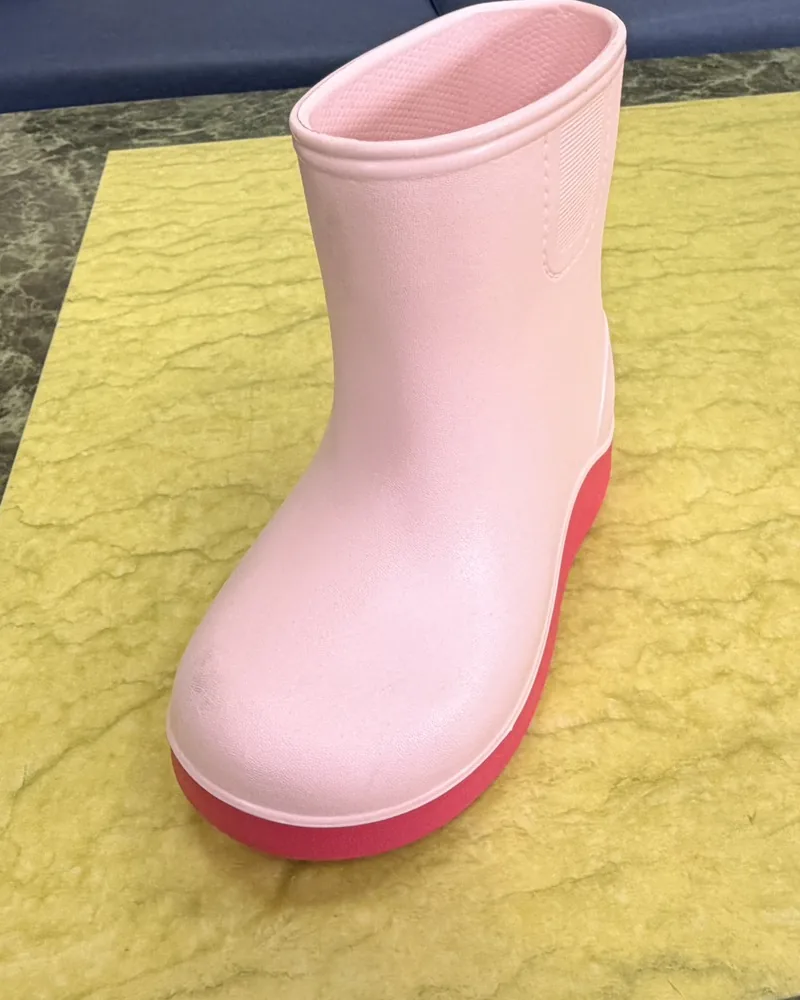
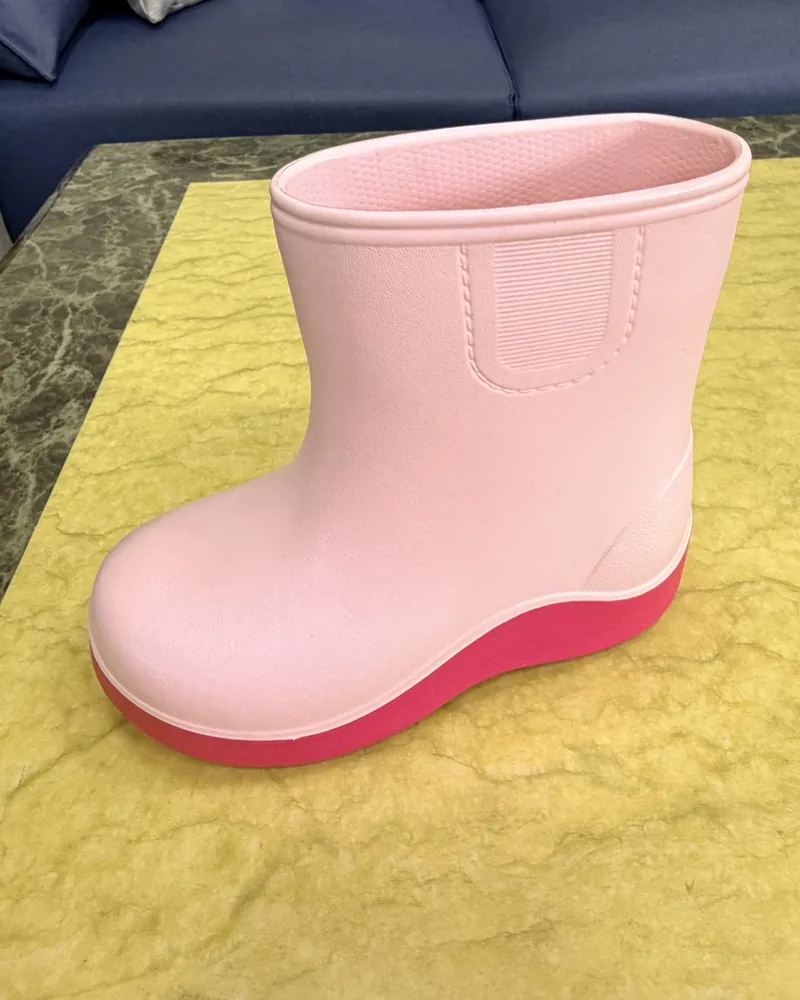
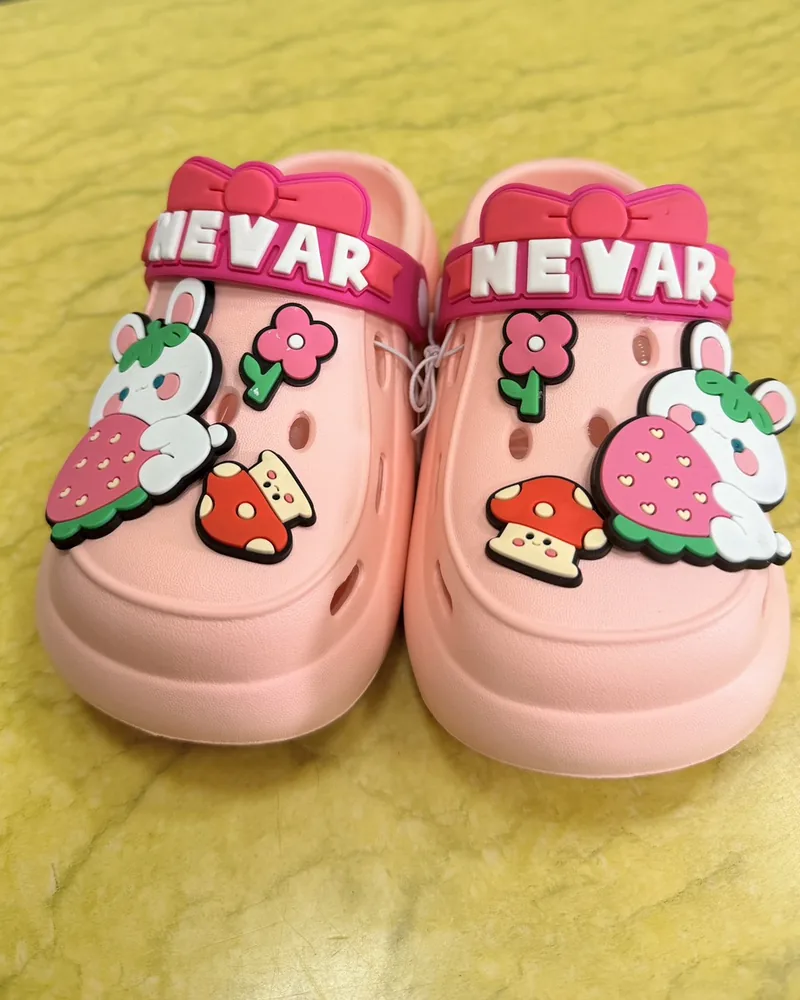
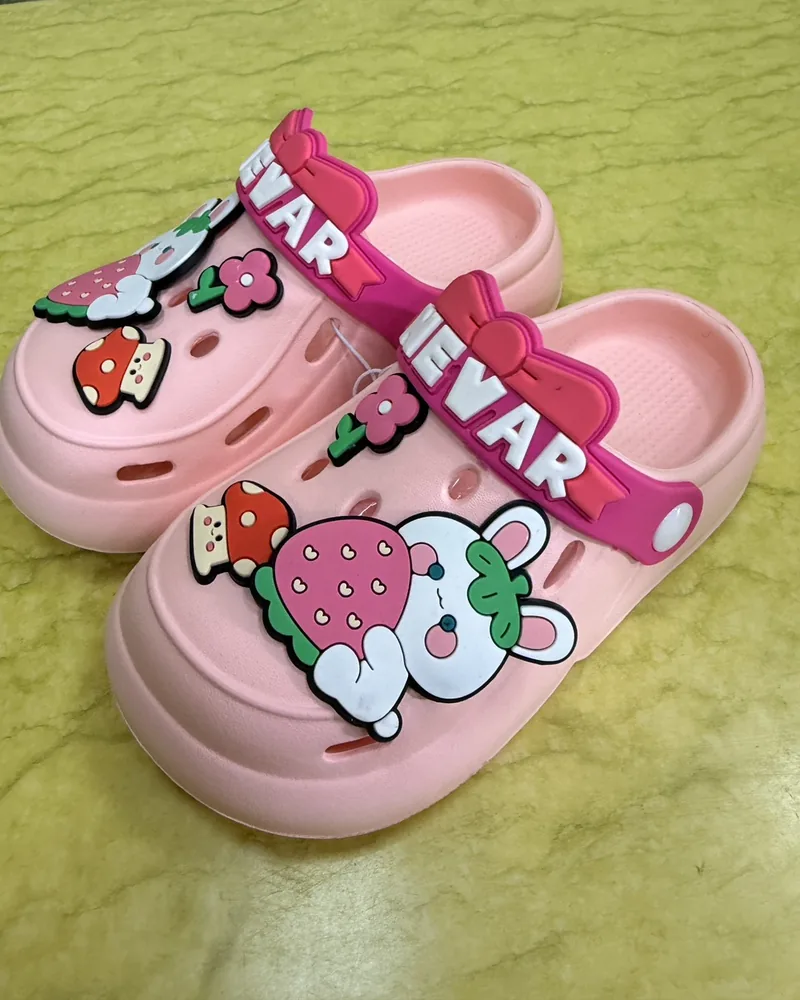
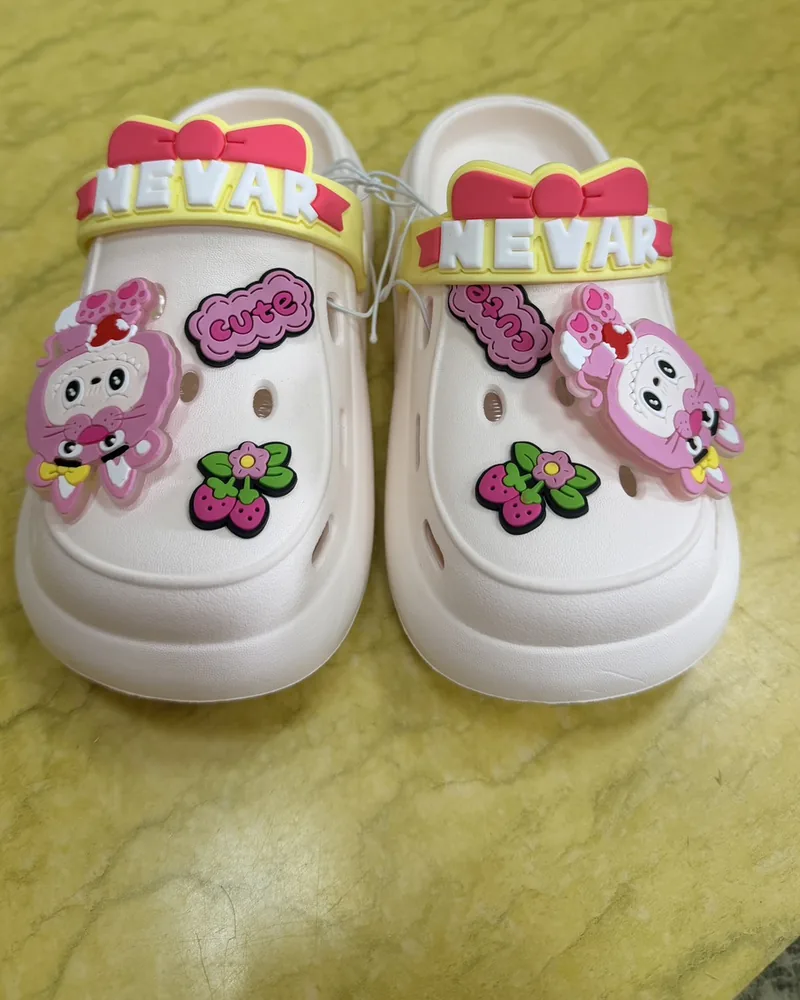
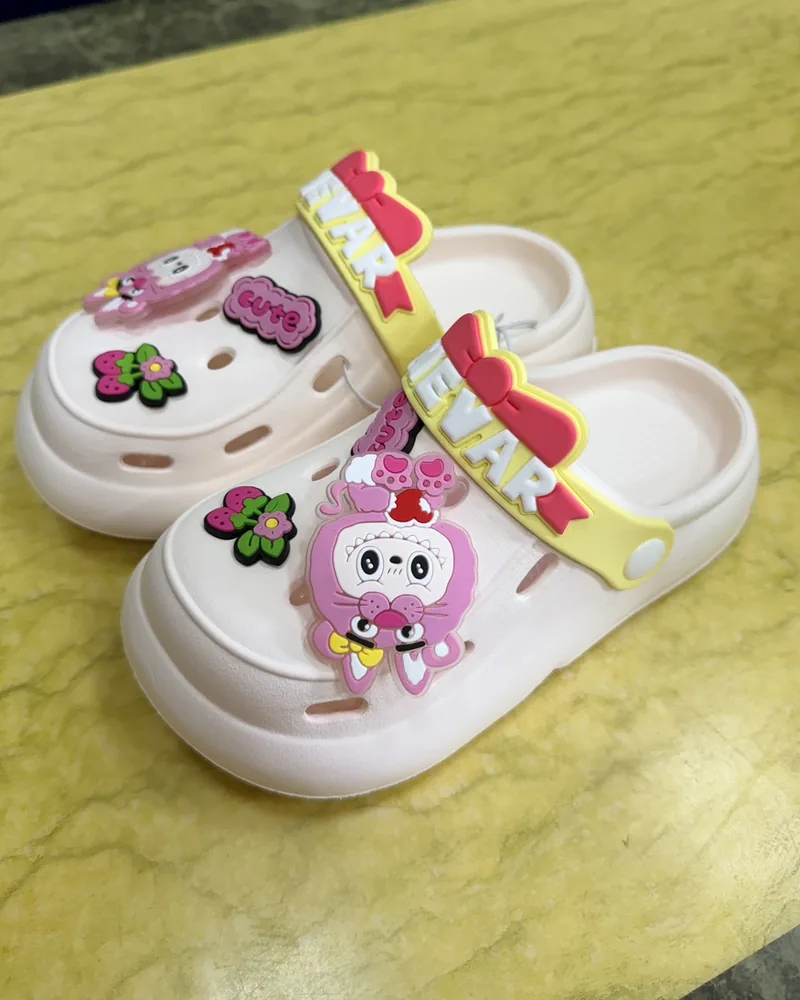
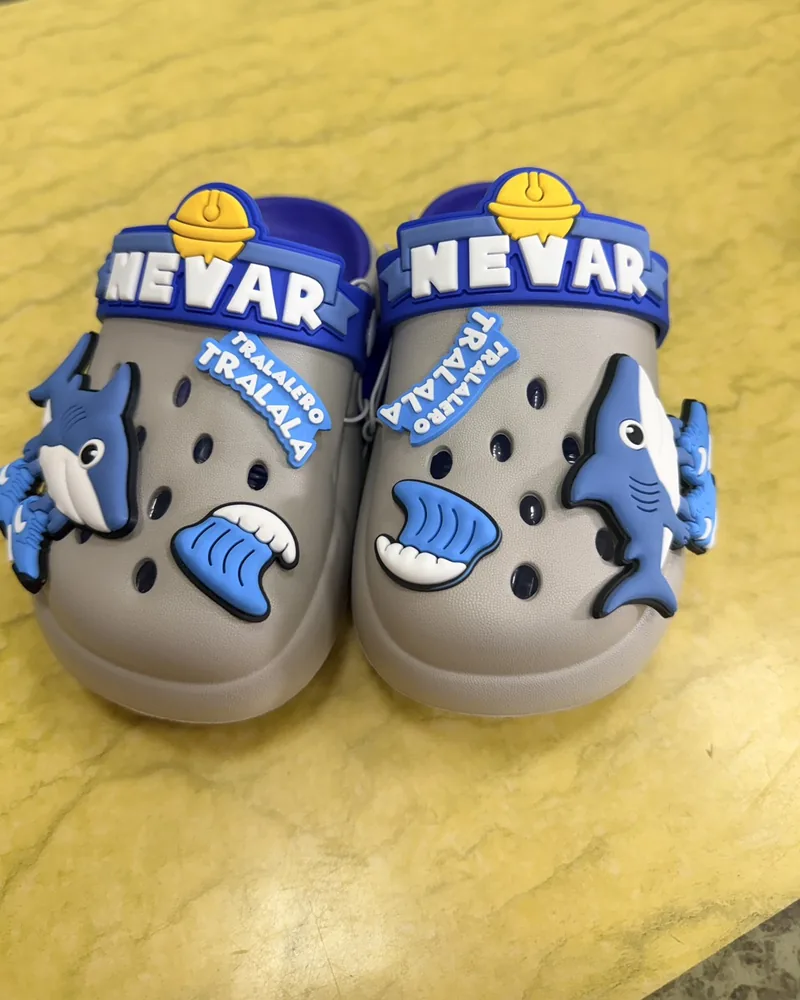
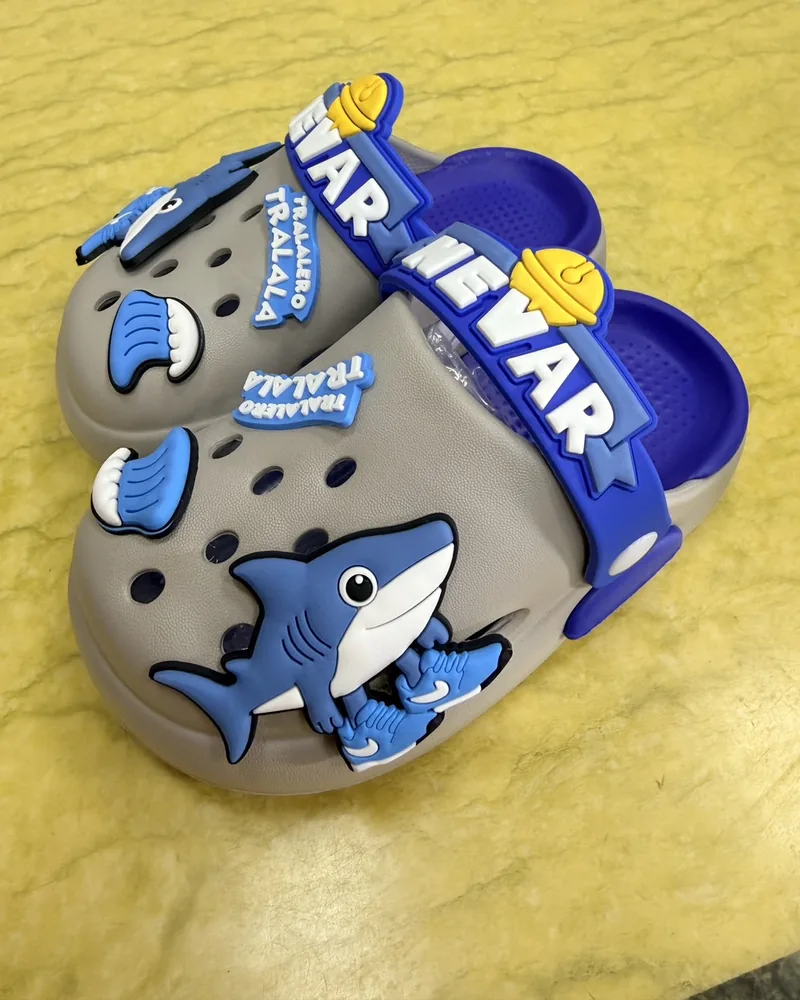
These are physical kids shoe samples at the factory: a kids rain boot and kids clogs in three colourways. All of them can be seen in person — handling the tread and weight makes choosing the right style much easier.
4. Kids styles we develop
| Style | Typical construction | Design priority | Good fit for |
|---|---|---|---|
| Kids clogs | One-piece body with pivoting strap | Tread drainage, strap retention, charm holes | Shoe shops, live-commerce, family retail |
| Kids rain boots | One-piece or two-colour outsole | Wet grip, opening width, boot weight | Rainy-season ranges, wholesale |
| Kids slippers / sandals | One-piece or assembled parts | Footbed wrap, forefoot flex, base width | Summer ranges, home retail |
| Other kids styles | Assessed from drawings | Outsole and structure planned for the use | Own-brand designs |
Style and material are assessed together with use and target retail price — bring a reference shoe or a drawing. For outsoles in other materials, see Outsole OEM / ODM and Multi-Material Outsole OEM.
5. Small runs: three ways to start
The biggest cost in kids footwear is moulds for the full size run. Starting small is therefore about deciding what has to be yours and what can be reused.
| Starting point | What it involves | Threshold | Suits |
|---|---|---|---|
| Existing style, new colours | An existing style with your choice of body, sole and strap colours | Lowest | First test sale, a trial live-commerce drop |
| Existing style, your brand | Colours plus a branded strap or your own charms | Medium | Shop own-label lines, creator collaborations |
| New style | New moulds from your drawing, exclusive shape and tread | Higher | Wholesale core lines, long-term brands |
Our advice: prove the market on an existing style, then invest in tooling once it sells. It keeps the first run’s cash exposure low and lets real sales decide the next step.
6. How we work with each type of partner
- Wholesalers
- Colour and size-run ratios, steady replenishment and shipping schedules
- Shoe and kids shoe shops
- Small multi-style trial runs and own-label straps for exclusive styles
- Parenting livestreamers
- See samples before launching a drop; production planned back from the drop date
- Parenting bloggers and KOLs
- Collaboration colourways and original charms fans will recognise
Live commerce cares most about having the product in hand before the drop and delivery dates that hold. We settle quantities, colours and size ratios at sampling so no size runs short after a drop opens.
7. Safety checks before launch
Parents want kids shoes that are not only comfortable but made from safe materials. In October 2025 Taiwan’s Consumers’ Foundation bought and tested 20 PVC kids rain boots; 11 exceeded the 0.1% total phthalate limit in CNS 15503, the general safety requirements for children’s products. The report also noted that kids shoes are not on the mandatory inspection list — in practice, quality assurance rests with the brand and the retailer.
- Phthalate test
- Total phthalates, against the CNS 15503 limit of 0.1%
- Heavy metal test
- Migratable heavy metals in plastic and rubber parts
- Slip test (optional)
- Complete shoe to SATRA TM144 or ISO 13287
- Product labelling
- Name, maker details, origin, main materials and size, per the market’s rules
We supply samples and material information for a laboratory you choose or commission. Listing with a report in hand makes parents’ questions much easier to answer.
8. How we work
You do not need a full specification to start. Book a factory visit to see the samples, tell us your channel, target customer and launch date, and we will suggest styles, colours and a sensible first quantity. The factory is in Tanzi, Taichung, and receives visitors Mon–Fri 09:00–17:00 (GMT+8) — call, message us on LINE or use the contact page to book.
9. Frequently asked
Kids shoes can be made in small runs. The minimum depends on three things: whether an existing mould is used, how many colourways and how the size run is split. Reusing an existing style with new colours and a brand strap has the lowest threshold; a new style needs moulds for the full size run, which raises both the minimum and the cost. Bring the styles and channel you have in mind and we will quote against those conditions.
Yes, and we recommend it. The factory keeps physical samples of kids clogs and rain boots, so on a visit you can compare tread pattern, flex, weight and colour — far easier than judging from photos. Please call ahead to book so the relevant samples are ready.
Yes. The usual approach is a brand name moulded into the heel strap or upper, and custom-shaped charms can be developed as well. Both need their own tooling, and we set out cost and timing before sampling.
Slip resistance has to be tested on the complete shoe; raw material data is no substitute. The common methods are SATRA TM144 and ISO 13287, which measure the friction of the forepart and heel on a contaminated tile or steel surface. If your channel needs a report, the approved sample can go to a third-party laboratory; we supply samples and material information and adjust tread or compound against the result.
This is the check that matters most for children’s footwear. In a 2025 test by Taiwan’s Consumers’ Foundation, 11 of 20 PVC kids rain boots exceeded 0.1% total phthalate plasticisers. Kids shoes are not currently on the Bureau of Standards, Metrology and Inspection’s list of mandatorily inspected products in Taiwan, so in practice the brand and the retailer carry that responsibility. We can provide material information and support third-party testing for phthalates and heavy metals before you list the product.
Characters protected by someone else’s copyright or trademark need a licence to be made and sold; without one, both brand and retailer carry the infringement risk. We recommend original characters or artwork, which avoids the problem and becomes part of what makes your brand recognisable.
It depends on whether a new mould is needed, how many colourways there are and whether testing must be completed first. A recoloured existing style is fastest; a new mould adds tooling and trial shots; waiting for a lab report adds the laboratory’s schedule. Tell us your launch or campaign date and we will plan back from it.
From concept to production — start with one call
Bring a sample, a drawing or an outline spec and our engineers will work through materials, tooling, sampling and production conditions with you.
Book a factory consultation ↗ Or call 04-2531-9388 (Mon–Fri 09:00–17:00, GMT+8)